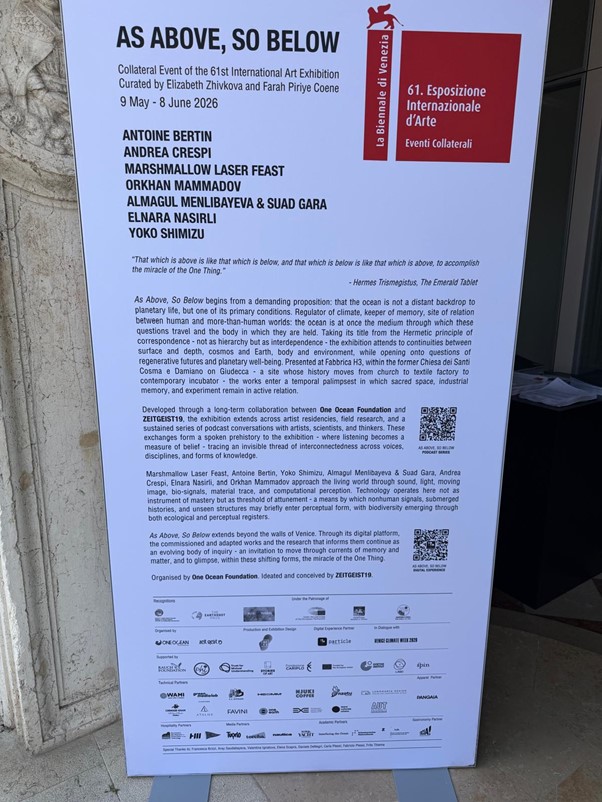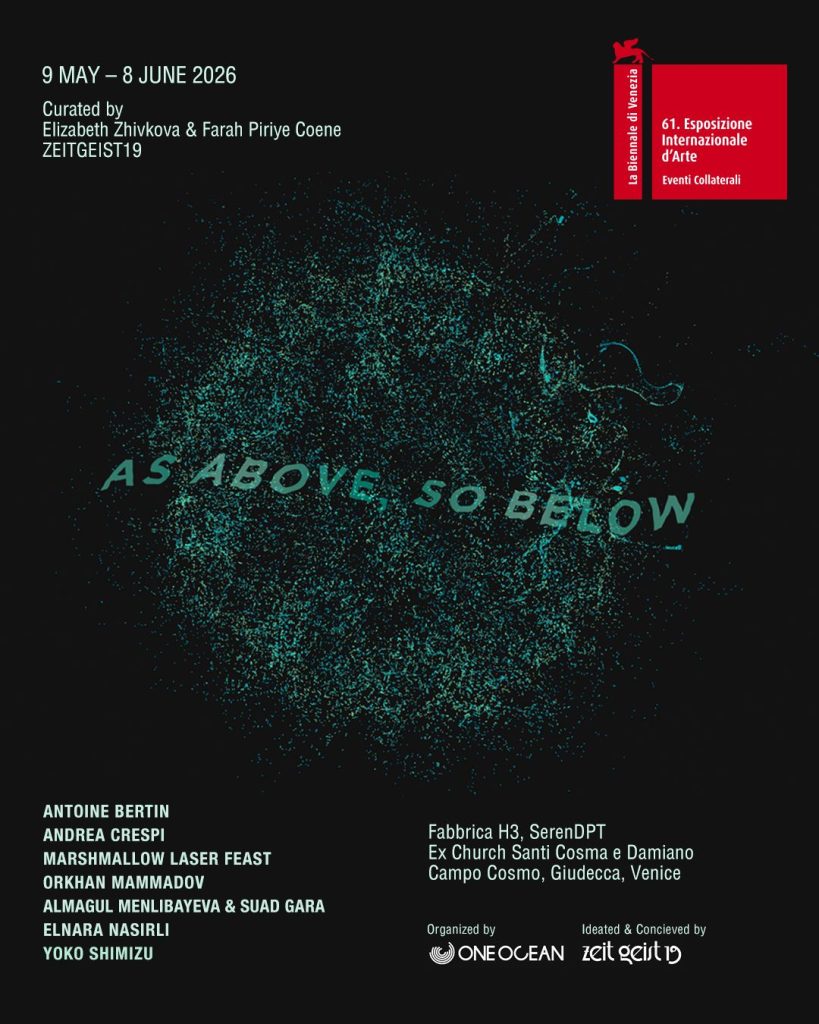
At the As Above, So Below conversations in Venice on May 9, 2026, Nzatu’s CEO Michele Sofisti joined a distinguished panel for “Regenerative Matter: Alchemy of Earth,” part of the public opening programme of the collateral event of La Biennale di Venezia Arte 2026. Organized by One Ocean Foundation and curated by ZEITGEIST19, the symposium brought together artists, scientists, thinkers, and regenerative practitioners to explore how transdisciplinary approaches can shape more connected, resilient futures. Within this setting, Michele represented Nzatu in a conversation that placed regeneration at the center of the discussion not as an abstract ideal, but as a practical pathway for transforming the systems that link economy, ecology, and community.
The panel explored how sustainability must move beyond narrative and into real systems change, addressing the politics of fibre, soil, agriculture, and waste, and opening space for alternatives rooted in biodiversity, innovation, and responsibility across supply chains. It emphasized models that can regenerate living systems while restoring value to territories and communities. Michele’s participation reflected exactly where Nzatu stands: at the intersection of regenerative agriculture, biodiversity protection, and inclusive rural development. Across sectors from food and farming to materials, land stewardship, and community livelihoods Nzatu promotes regenerative practices that restore soils, strengthen local economies, and reconnect production with nature. In Venice, Michele helped bring this vision into a wider international dialogue, showing that regeneration is not confined to one industry. It is a shared framework for rethinking how we grow, source, produce, and live.
A concrete example of this vision was ArtCafe / Njuki Coffee, which was offered and tasted during the event as a living expression of regenerative value chains in action. More than a product, Njuki shows how commercialization itself can become a form of communication carrying the story of regenerative farming, biodiversity, and community livelihoods directly to consumers. In this sense, the packaging is not simply a wrapper, but a storytelling tool: one that connects the cup in someone’s hand to the landscapes, farmers, and ecological practices behind it. By making the commercial journey part of the narrative, Nzatu and ArtCafe demonstrate that markets can do more than sell they can educate, inspire, and build a deeper relationship between people and the systems that sustain life.
For Nzatu, this moment was part of a broader mission: to demonstrate that regenerative practices can travel across sectors and geographies while remaining grounded in local landscapes and communities. Michele’s contribution underscored that the future lies in interconnected systems where agriculture, innovation, culture, and environmental responsibility no longer operate in silos, but as part of one living whole. That is the future Nzatu is helping build.