


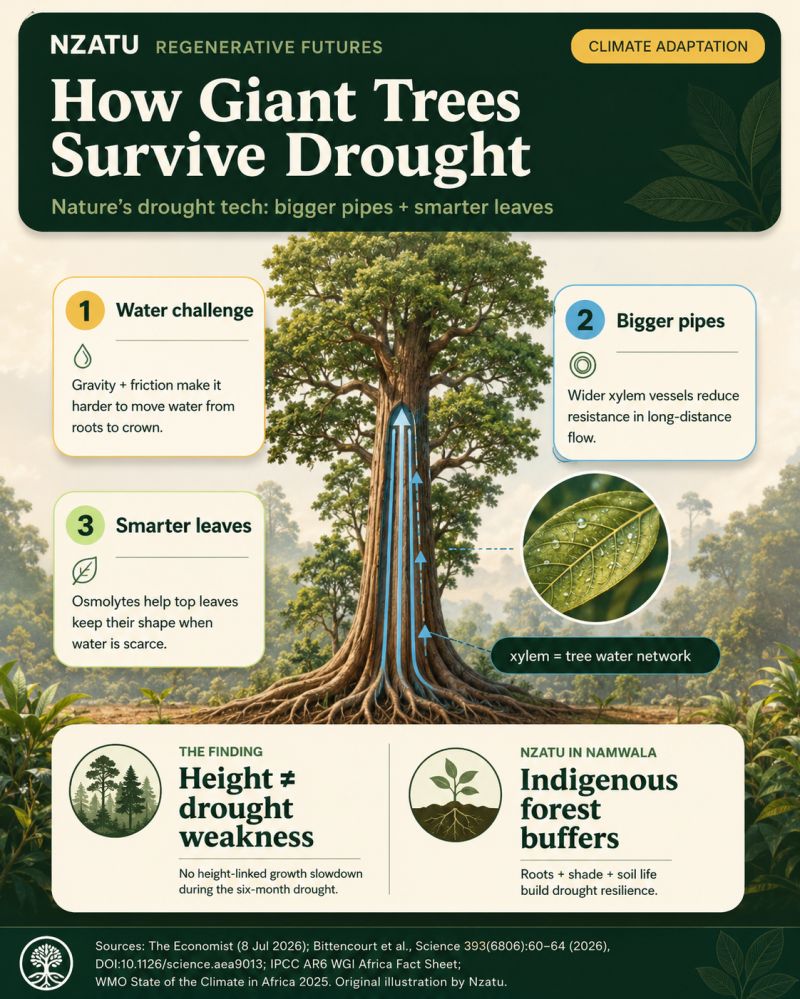
Recent research has shown that giant tropical trees are not necessarily more vulnerable to drought. Instead, they have evolved effective mechanisms to regulate water movement and maintain healthy foliage, allowing them to withstand challenging climatic conditions.
These findings reinforce the importance of long-term ecological restoration within Nzatu Food Group’s Trees for People project in Namwala, Zambia.
Alongside productive species, the project also focuses on restoring long-living indigenous shade trees that may not provide immediate economic returns but deliver lasting environmental and community benefits. These trees contribute to:
- Cooler microclimates for surrounding vegetation.
- Improved soil health and greater water retention.
- Habitat for birds, pollinators and other wildlife.
- Long-term carbon storage.
- Increased resilience of local communities during periods of extreme drought.
Not every valuable tree is planted for its harvest. Some are planted to strengthen ecosystems, protect biodiversity and create healthier, more resilient landscapes for future generations.