


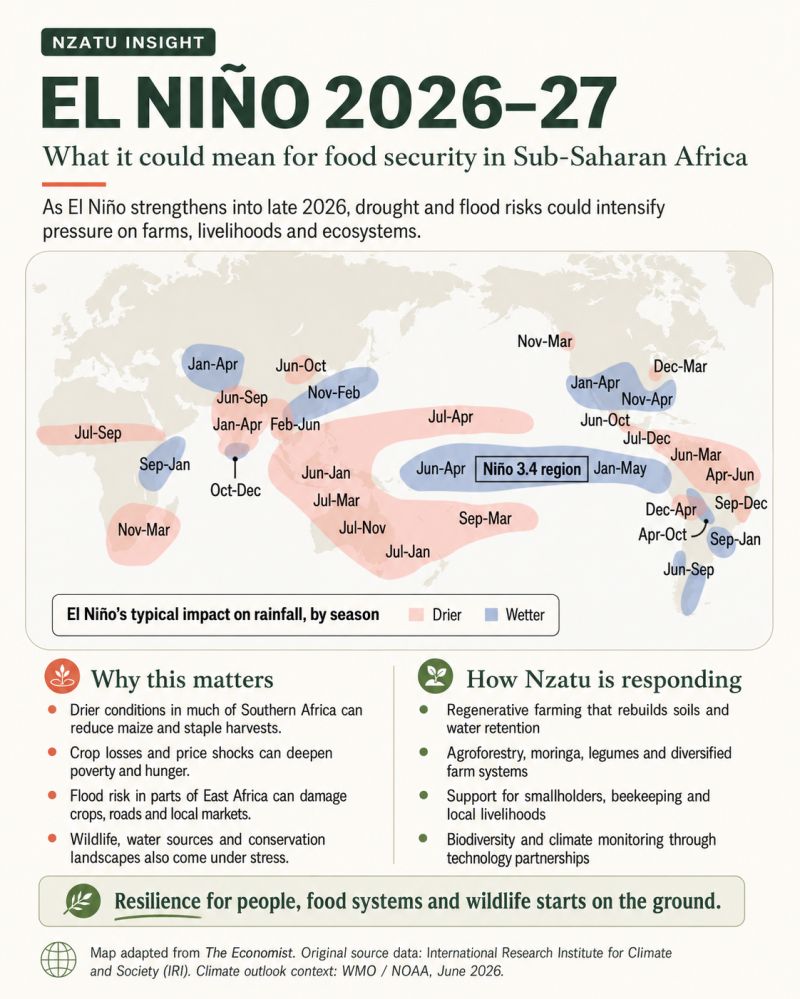
As El Niño is expected to strengthen through late 2026 and into 2027, many parts of Sub-Saharan Africa could experience increased climate variability, with prolonged droughts in some regions and heavier rainfall in others. These changing conditions have the potential to place additional pressure on agriculture, rural livelihoods and natural ecosystems.
In Southern Africa, drier conditions may reduce maize and other staple crop harvests, while parts of East Africa could face increased flood risks affecting crops, infrastructure and local markets. Such climate impacts can threaten food security, increase economic vulnerability and place further stress on wildlife habitats and water resources.
At Nzatu, building resilience begins at the local level. Our regenerative agriculture approach focuses on restoring the natural systems that support both people and nature through:
- Regenerative farming practices that rebuild healthy soils and improve water retention.
- Agroforestry systems incorporating moringa, legumes and diversified crops.
- Support for smallholder farmers through beekeeping and sustainable livelihood initiatives.
- Biodiversity and climate monitoring developed in collaboration with technology partners.
By strengthening agricultural landscapes and supporting local communities, Nzatu is working to improve the resilience of food systems while contributing to the long-term protection of biodiversity and natural ecosystems.
Resilience for people, food systems and wildlife starts on the ground.