At Nzatu’s Trees for People project in Namwala, Zambia, the first results of a regenerative farming model are demonstrating how healthy soils, diversified crops and sustainable agricultural practices can strengthen local livelihoods while restoring the environment.
Harvest Results from Seed Trials
Initial seed trials have produced encouraging outcomes:
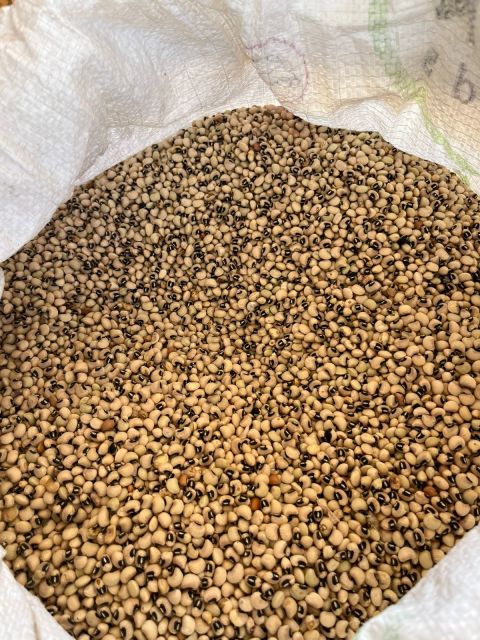
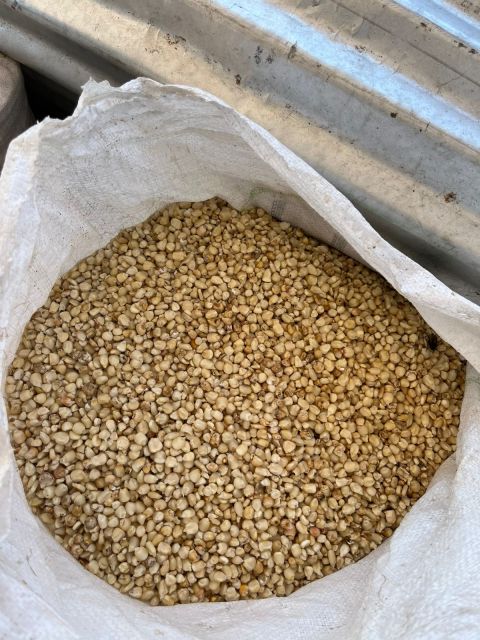
- 0.5 kg of cowpea seed → 1 × 50 kg bag
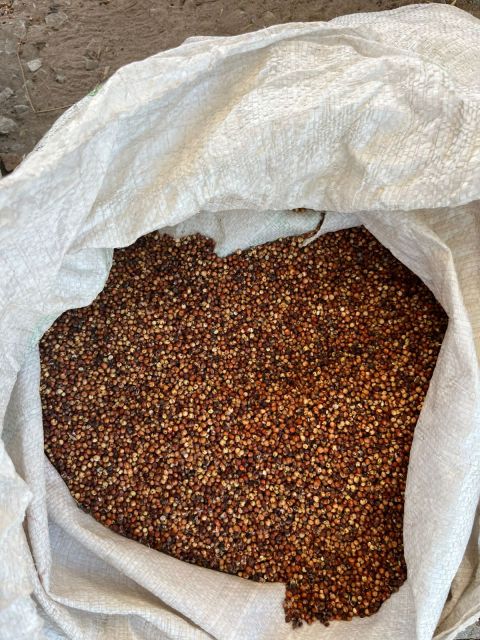
- 0.5 kg of white sorghum seed → 1 × 50 kg bag
- 0.2 kg of red sorghum seed → 7.5 kg
- 5 kg of corn seed → 5 × 50 kg bags
The harvested corn has been distributed among Nzatu staff members to support household food needs. The cowpea harvest will be retained primarily for the next planting season to continue improving soil fertility through nitrogen fixation, with part of the seed reserved for distribution to other farmers.
The trials also provided valuable agronomic insights. White sorghum proved to be better adapted to Namwala’s soil conditions than the red variety, and future planting will therefore focus on the higher-performing crop.
Building Healthier Farming Systems
The next stage of the project will introduce wheat into the fields previously planted with cowpeas, continuing to evaluate crop rotations that enhance soil fertility, improve nutrition and increase climate resilience.
Across the farm, several regenerative initiatives are developing successfully:
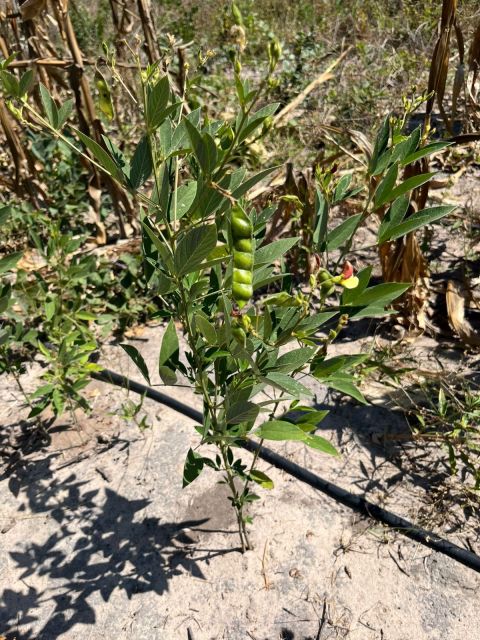
- Pigeon peas are growing vigorously.
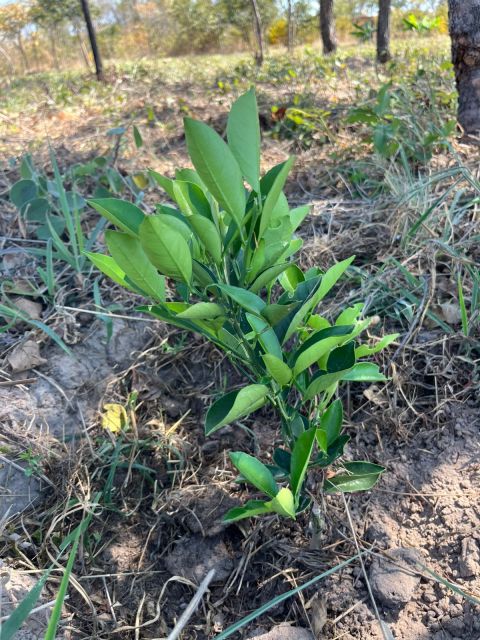
- Citrus orchards are thriving with the support of chicken manure as a natural fertilizer.
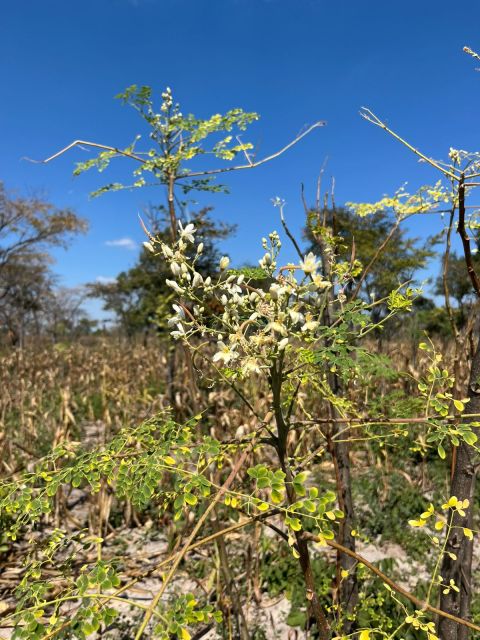
- Moringa trees are flowering strongly following pruning and branch thinning.
- Chickens contribute to nutrient cycling by naturally returning organic matter to the soil.
Healthy Soil, Healthy Ecosystems
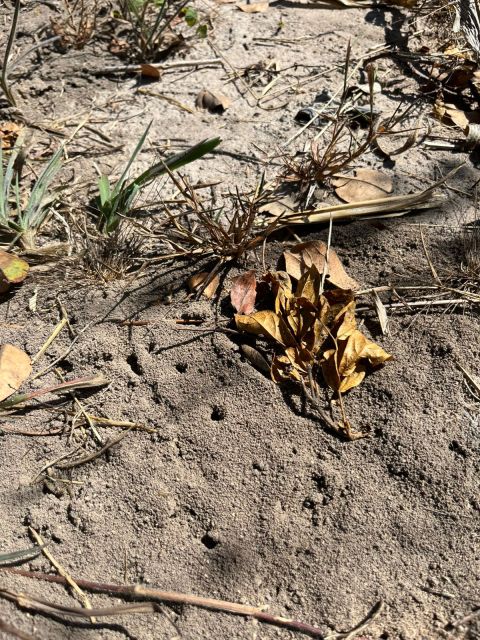
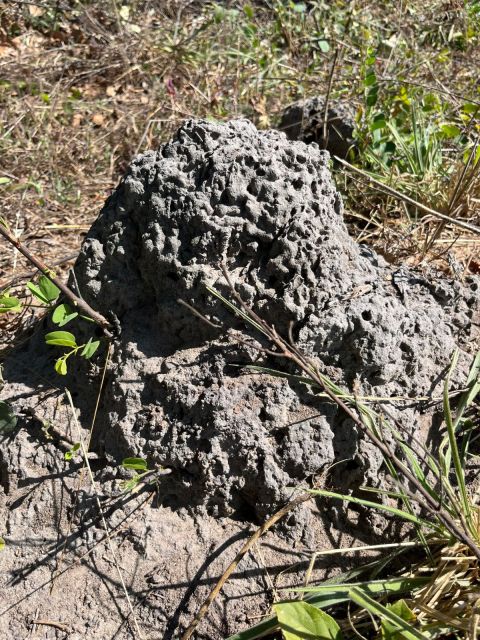
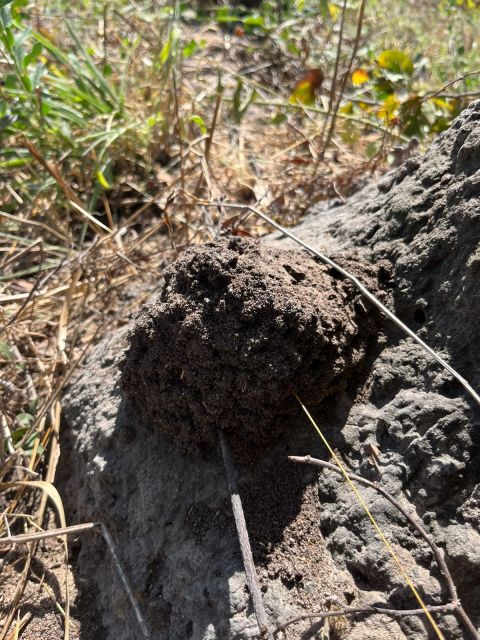
The project has also recorded strong ant activity, an encouraging indicator of biological recovery. By creating tunnels, chambers and mounds, ants improve soil aeration, increase water infiltration, transport organic matter below ground and support nutrient cycling.
In the hot and dry landscapes of Southern Zambia, active soil life contributes to better water retention, stronger root systems, improved soil structure and greater ecosystem resilience.
These early results demonstrate that regenerative agriculture is built on interconnected systems rather than single interventions. By combining crop diversity, healthy soils, biodiversity and community-focused farming practices, Nzatu is working to create resilient agricultural landscapes that benefit both people and nature.